
ScanChess Blog
Guides on chess notation, scoresheets, PGN, and digitizing your games.
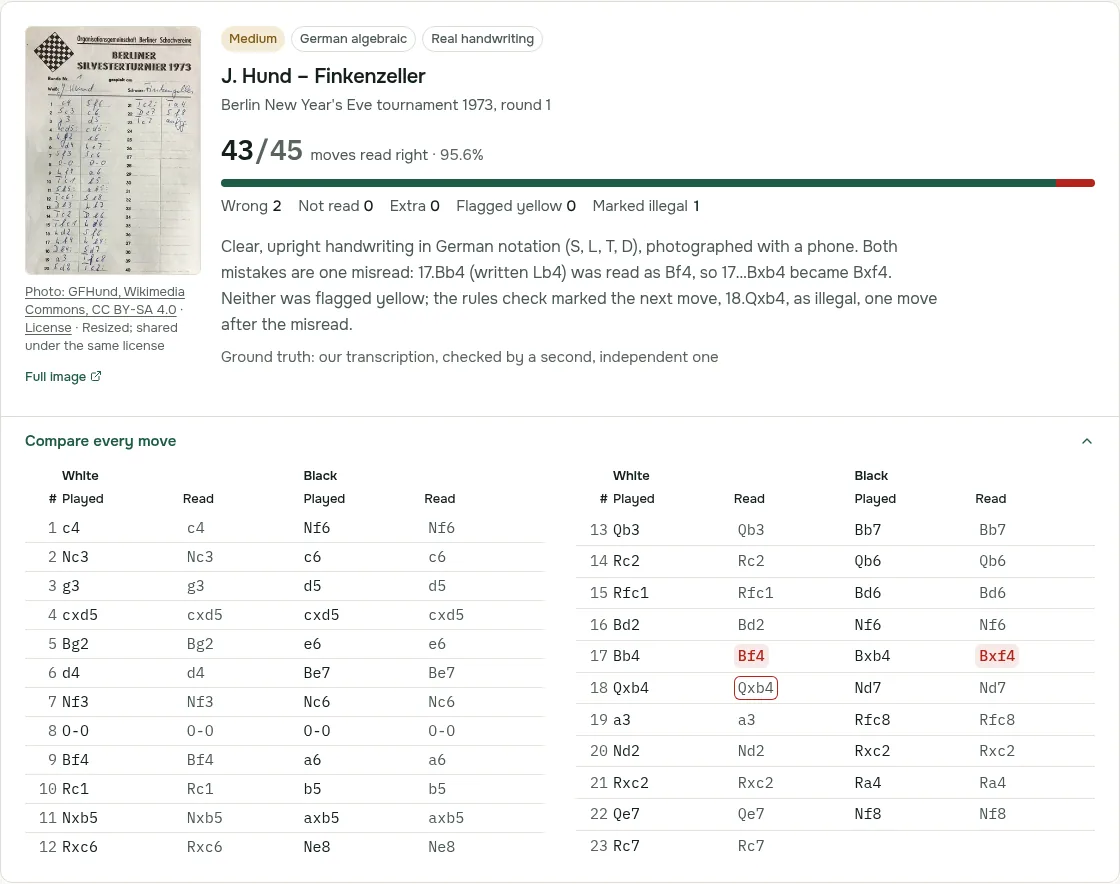 Comparison
Chessvision AI Alternative: 7 Tools by What You Scan (2026)
Chessvision.ai reads diagrams off screens and books. If you need something else, the right replacement depends on what you are pointing the camera at.
7 min read- Guides
Time Control Notation Explained: 90+30, 40/120, d5 and SD
4 min read 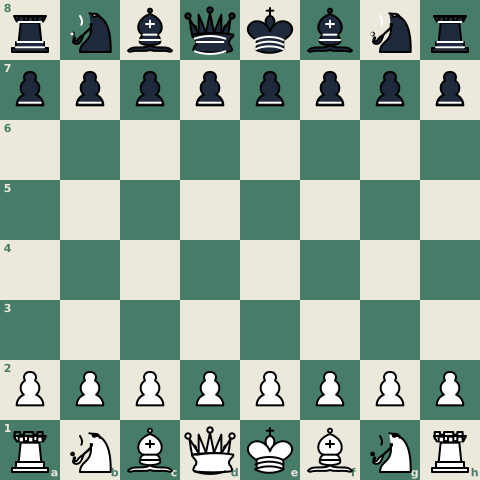 Guides
How to Set Up a Chess Board, Square by Square
5 min read- Guides
How to Embed an Interactive Chess Board on Your Website
5 min read - Rules
USCF Scoresheet Rules, and Where They Differ from FIDE
6 min read 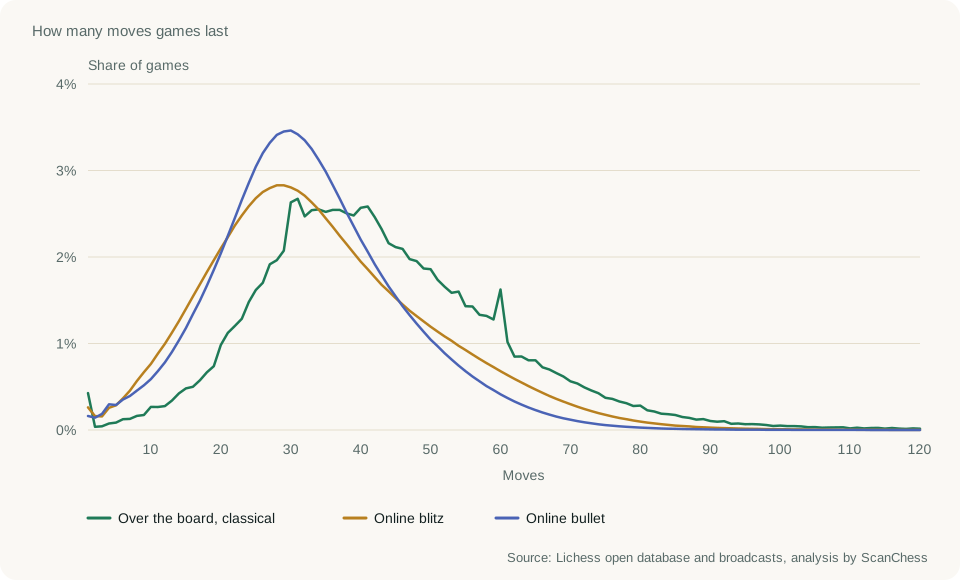 Statistics
How Long Is a Chess Game? Moves and Minutes From 91 Million Games
13 min read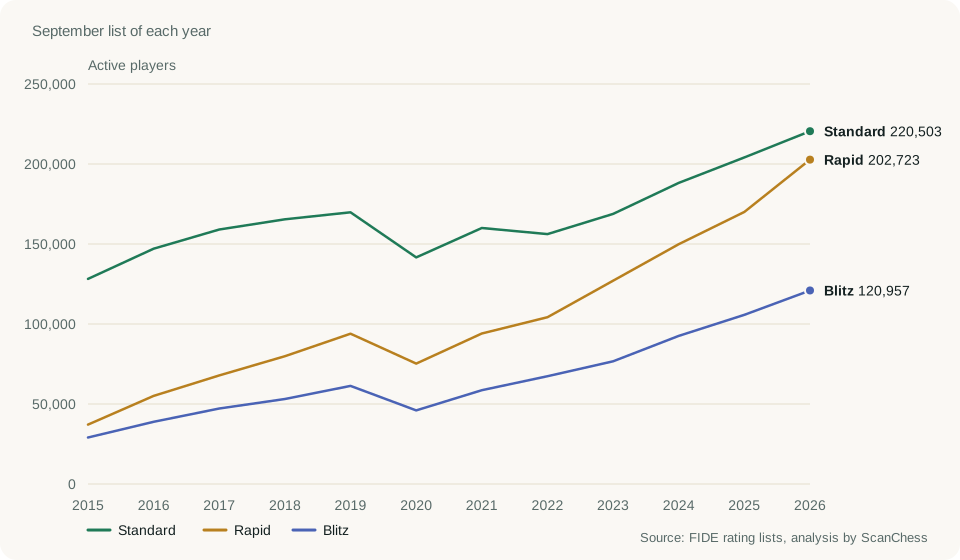 Statistics
FIDE Rated Players in 2026: Statistics by Country, Age, Gender and Rating
19 min read
Earlier guides
- Chess Vision Tools Compared: Chessvision.ai vs ScanChessComparison
- Archive a Whole Tournament Round in One PassGuides
- How ScanChess Handles a Move It Can't Quite ReadImprovement
- How to Choose and Fill In a Chess Scoresheet: 60, 80 and Kids' LayoutsTools
- How to Read a Chess Scoresheet: A Beginner's GuideGuides
- SAN (Standard Algebraic Notation): Chess Notation ExplainedNotation
- What Is PGN? The Chess Game Format, ExplainedNotation
- How to Convert a Handwritten Chess Scoresheet to PGNGuides
- FIDE Scoresheet Rules Every Chess Player Should KnowRules
- How to Analyze Your Chess Games from ScoresheetsImprovement
- How to Import a PGN into Lichess (Step by Step)Guides
- How to Import a PGN into Chess.comGuides
- What Is FEN? Chess Position Notation ExplainedNotation
- How to Fill Out a Chess Scoresheet CorrectlyGuides
- 7 Common Chess Notation Mistakes (and How to Avoid Them)Notation
- Descriptive vs. Algebraic Chess NotationNotation
- Chess Symbols and Annotations Explained (!, ?, !!, ??)Notation
- From Scoresheet to Lichess Study: A Complete WorkflowGuides
- How to Share a Chess Game Online (PGN, FEN, and Links)Guides
- How to Get a Clean Scan of a Chess Scoresheet (Photo Tips)Guides
- How to Store and Archive Your Chess ScoresheetsGuides
Help
Credits, plans, canceling and refunds.
- ScanChess Billing and Refunds, ExplainedWho charges you, what your statement says, why ScanChess does not offer refunds, and what to do instead if you no longer want to be billed.
- ScanChess Free vs Pro: What You Actually GetAn honest comparison of the free tier, Pro and Pro+ on ScanChess — what each one includes, what is limited, and roughly when paying starts to make…
- How to Cancel a ScanChess SubscriptionCancel ScanChess Pro yourself with one button on the pricing page. What you keep after canceling, and what canceling does not do.
- How ScanChess Credits WorkWhat a credit is, what each scan costs, how the 10 free credits and the 100 monthly Pro credits behave, and what happens when your balance runs out.
Solutions
- Chess Book to PGN: Scan Diagrams from a Book You Own
- Chess Board Image to FEN: How to Convert a Photo, Screenshot or Diagram
- Digitize Your Students' Games: ScanChess for Coaches
- Saving Your Child's Chess Games: A Parent's Guide
- Tournament Scoresheet Archiving: For Arbiters and Organizers
- Convert a Chess Scoresheet to PGN, Step by Step
- Chess Board Scanner: Photograph a Real Board to Get FEN
- Chess Scoresheet Scanner: Handwritten Scoresheets to PGN
- Chess PGN Converter: What Comes Out and Where It Opens
- Digitize Your Chess Games: Working Through a Backlog
- Photo to PGN: Getting the Scoresheet Shot Right
- Scan Chess Notation: Which Handwritten Styles It Reads